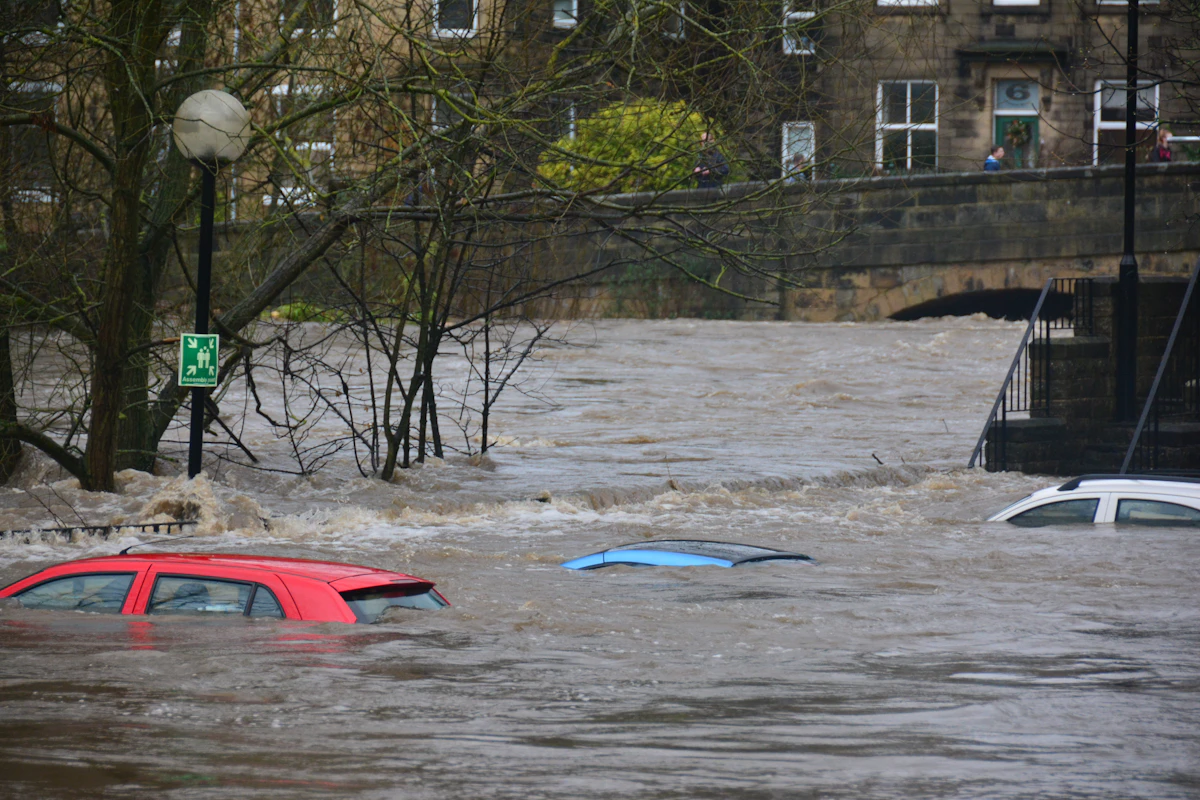
Flash Flood vs. River Flood vs. Coastal Flood: The Differences
Not all floods are the same. A flash flood that strikes a mountain canyon gives you minutes to respond. A river flood on the Mississippi River is visible for days. A coastal storm surge from a Category 4 hurricane moves at highway speed and carries debris that demolishes structures. Preparing correctly requires understanding which type you face — because the timelines, warning signs, and defenses are completely different.
The three primary flood types
FEMA and NOAA classify floods into several categories, but three types account for the overwhelming majority of US flood damage and fatalities: flash floods, riverine (river) floods, and coastal floods. Each has a fundamentally different mechanism, timeline, and required response.
Flash floods: speed is the killer
Flash floods are defined by their speed of onset — typically less than 6 hours from cause (heavy rainfall, dam failure, or sudden snowmelt) to peak flood conditions. They're the most lethal flood type in the United States, killing more than 80 people per year on average — more than hurricanes, tornadoes, or lightning most years.
How flash floods form
Flash floods have three common triggers:
- Intense localized rainfall. Thunderstorms that drop 1–3 inches of rain in an hour overwhelm local drainage. The water can't infiltrate or drain fast enough, and runoff concentrates rapidly in low points, stream channels, and urban drainage networks. Urban flash floods can develop under clear skies when upstream catchments receive heavy rain you can't see from your location.
- Dam and levee failure. When an upstream impoundment fails — whether a reservoir dam, a beaver dam, or a road embankment acting as a de facto dam — the stored water releases instantly. The 1972 Buffalo Creek disaster (125 dead) and the 1976 Big Thompson Canyon flood (143 dead) were both dam-failure flash floods.
- Post-fire debris flows. Burned hillsides lose their vegetation and soil structure. What was previously slow infiltration becomes instant runoff, carrying ash, debris, and saturated soil. The 2018 Montecito debris flow that killed 23 people occurred on a burn scar from the Thomas Fire.
Flash flood characteristics
- Rise rate: 6 feet in minutes is common; 12+ feet in an hour possible in confined canyons
- Water velocity: 10–20 feet per second in channels — fast enough to carry boulders and vehicles
- Warning time: 5 minutes to 2 hours typically; sometimes zero in canyon environments
- Duration: Minutes to several hours; recedes nearly as fast as it rose
- Most dangerous locations: Canyons, dry washes, low-water crossings, underpasses, drainage channels, low-lying areas downstream of steep terrain
Flash flood defense
Because warning time is so short, passive defenses matter most: avoid flood-prone locations in heavy rain, never park in dry creek beds, and if you see water rising — move immediately, don't wait. For homes in flash flood zones:
- Flood barriers at entry points that can be deployed in under 15 minutes
- Sump pump with battery backup (power outages often accompany flash floods)
- NOAA Weather Radio for immediate flash flood warnings
- Know your evacuation route before the event
Check our rapid-deploy flood barriers — specifically water-activated and fold-flat barriers designed for fast deployment.
River (riverine) floods: slow rise, high damage
Riverine floods occur when rivers or streams overflow their banks due to sustained or heavy rainfall over a large watershed, or rapid snowmelt. Unlike flash floods, riverine floods give you time — typically 12 hours to several days of rising water before the peak.
How riverine floods form
River flooding is a watershed-scale event. When the cumulative rainfall across a river's entire drainage basin exceeds what the river system can carry, water spills over the banks. The Mississippi River drainage basin is 1.2 million square miles — heavy spring rains across Iowa, Minnesota, and Wisconsin produce flooding in Missouri and Illinois weeks later.
The key factors in riverine flood severity:
- Antecedent soil moisture. Saturated soils from previous precipitation contribute nearly 100% of additional rainfall as runoff rather than infiltration. Spring floods are severe partly because soil is already at or near saturation from winter snowpack.
- Snowmelt timing. Rapid snowmelt combined with spring rain overwhelms river capacity. The Red River basin in Minnesota and North Dakota floods almost every spring for this reason.
- Channel geometry. Rivers in narrow valleys confine floodwater to a smaller area — higher depth, faster velocity. Wide floodplains spread water shallowly over large areas.
Riverine flood characteristics
- Rise rate: Inches to feet per day; highly predictable once the flood wave enters the river system
- Water velocity: 1–5 feet per second in most riverine floods; dangerous but not the instant kill of a flash flood
- Warning time: 12 hours to several days
- Duration: Days to weeks for major river events; the 1993 Mississippi flood lasted over 2 months
- Most dangerous locations: Properties in FEMA-mapped AE flood zones adjacent to rivers and streams
Riverine flood defense
The longer warning time makes sandbags, pump staging, and property preparation feasible in ways they aren't for flash floods. What you can do with 48 hours of warning:
- Deploy sandbags or water-filled barriers around entry points
- Move valuables and appliances to upper floors
- Shut off natural gas and electricity to basement circuits
- Stage a sump pump and generator if not permanently installed
- Document your home's condition with photos for insurance purposes
FEMA maintains a river gauge network at water.weather.gov that provides real-time river stage readings and flood forecasts by location. If you live near a USGS-gauged stream, bookmark the upstream gauge — it gives you hours of additional warning time.
Coastal floods: surge, wave action, and the compound event
Coastal flooding occurs when ocean water inundates land — driven by storm surge from hurricanes and nor'easters, king tides combined with onshore winds, or tsunami (rare outside Alaska and Hawaii). Storm surge is the most destructive force in US natural disasters per event.
How storm surge works
Storm surge is water pushed ashore by hurricane-force winds. The mechanism is different from rain-driven flooding: it's the ocean physically rising onto land, pushed by sustained 100–150+ mph winds acting over the ocean surface. The surge arrives ahead of or simultaneously with the storm's landfall, before the rain has even started.
Key factors in surge height:
- Wind speed. More intense storms produce higher surge. Hurricane Katrina produced a 28-foot surge at Biloxi, Mississippi — the highest ever recorded on the Gulf Coast.
- Forward speed. Slower storms push more water ashore — the wind has more time to act on the ocean surface. Hurricane Harvey's extreme slowness (it moved at 5 mph at landfall) dramatically amplified its flooding impact.
- Coastal geometry. Shallow, funnel-shaped coastlines like Tampa Bay and the Texas coast amplify surge height. The Bay of Bengal's funnel shape produces catastrophic surges during cyclones; the Gulf Coast has similar geometry.
- Offshore bathymetry. Shallow underwater shelves amplify surge; steep drop-offs reduce it. The shallow shelf off Louisiana extends surge further inland.
Coastal flood characteristics
- Rise rate: Surge arrives in hours (not days); can rise several feet per hour during active landfall
- Water velocity: 10–30+ feet per second in active surge — structural demolition force
- Warning time: 24–72 hours (hurricane track forecasting is reliable at 3-day range)
- Duration: Surge peaks for 2–6 hours near landfall; elevated water levels persist for 12–24 hours
- Additional hazard: Wave action on top of surge — a 10-foot surge with 15-foot waves can demolish structures built for 10-foot surge alone
Coastal flood defense
No residential barrier stops major storm surge. Defense for coastal floods is fundamentally different:
- Evacuation. When surge forecasts exceed 6 feet, staying in a single-story coastal structure is life-threatening. No property protection measure compensates for a fatal decision to shelter in place.
- Structural elevation. Homes elevated above the expected surge level survive with much less damage. FEMA's Hazard Mitigation Grant Program funds elevation for high-risk coastal properties.
- Flood insurance with building coverage. Average NFIP claims for major coastal events exceed $100,000. Without coverage, the financial loss from a single event can be total.
- Pre-positioned temporary barriers for the windows and doors — not to stop surge, but to reduce debris penetration from the surge's leading edge and wave action.
Side-by-side comparison
| Factor | Flash Flood | River Flood | Coastal Flood |
|---|---|---|---|
| Warning time | Minutes to 2 hours | 12 hours to days | 24–72 hours |
| Rise rate | Feet per minute | Inches to feet per day | Feet per hour at landfall |
| Water velocity | Very high (10–20 fps) | Moderate (1–5 fps) | Extreme (10–30+ fps with surge) |
| Primary risk | Drowning, debris impact | Property damage, prolonged inundation | Structural demolition, drowning |
| Duration | Minutes to hours | Days to weeks | Hours (surge) to days (residual) |
| Best defense | Avoidance, rapid barriers | Sandbags, pumps, insurance | Evacuation, elevation, insurance |
| Annual US deaths | ~80–100 | ~20–40 | Highly variable (100+ in major storms) |
Compound events: when types combine
The most catastrophic US flood events are typically compound events — multiple flood types occurring simultaneously or sequentially. Hurricane Harvey (2017) combined storm surge along the coast with extreme rainfall-driven riverine flooding across 5,000 square miles of southeast Texas. The rainfall total (60 inches in four days in some locations) overwhelmed the Addicks and Barker reservoirs, producing an engineered flood release on top of already-flooded neighborhoods.
Understanding that compound events are increasingly common — and that your risk depends on what's upstream, what's behind you, and what's in the sky — is the foundation of complete flood preparedness. Use our Flood Risk Assessment tool to understand your specific exposure to each type.
FAQs
What is the most dangerous type of flood?
Flash floods kill more Americans per year than any other flood type — over 80 on average, more than hurricanes most years. Their speed and the minimal warning time are what make them so deadly. River floods cause more total property damage but allow time to prepare. Coastal storm surge produces the highest single-event death tolls (Katrina: 1,836 deaths).
How fast does flash flood water rise?
Flash floods can raise water levels 6 feet or more within minutes. In narrow canyons and urban channels, a wall of water can move at 10–20 feet per second. Most flash flood fatalities occur near normally dry stream beds — locations that look safe but concentrate rushing water during an event.
How far inland can a coastal flood reach?
Major hurricane storm surge can penetrate 10–30 miles inland in flat coastal areas. Hurricane Katrina's surge reached over 25 miles inland in Mississippi. Inland penetration depends on storm intensity, forward speed, coastal geometry, and local elevation. FEMA's coastal flood maps show storm surge extent by category for most hurricane-prone coastlines.
What's the difference between a flood watch and a flood warning?
A flood watch means conditions are favorable for flooding — be prepared. A flood warning means flooding is occurring or imminent — act now. A flash flood warning is the most urgent: flash flooding is happening or will occur within minutes to hours. For flash floods, the warning-to-event gap can be as short as 5 minutes. Set your phone to receive emergency alerts.
Can you drive through a flooded road?
No. 6 inches of fast-moving water can knock a person down. 12 inches can carry away a small car. 2 feet floats most vehicles. Flood water hides washed-out road surfaces, debris, and depth changes. The phrase "turn around, don't drown" exists because most flood driving fatalities occur in less than 2 feet of water.